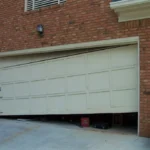
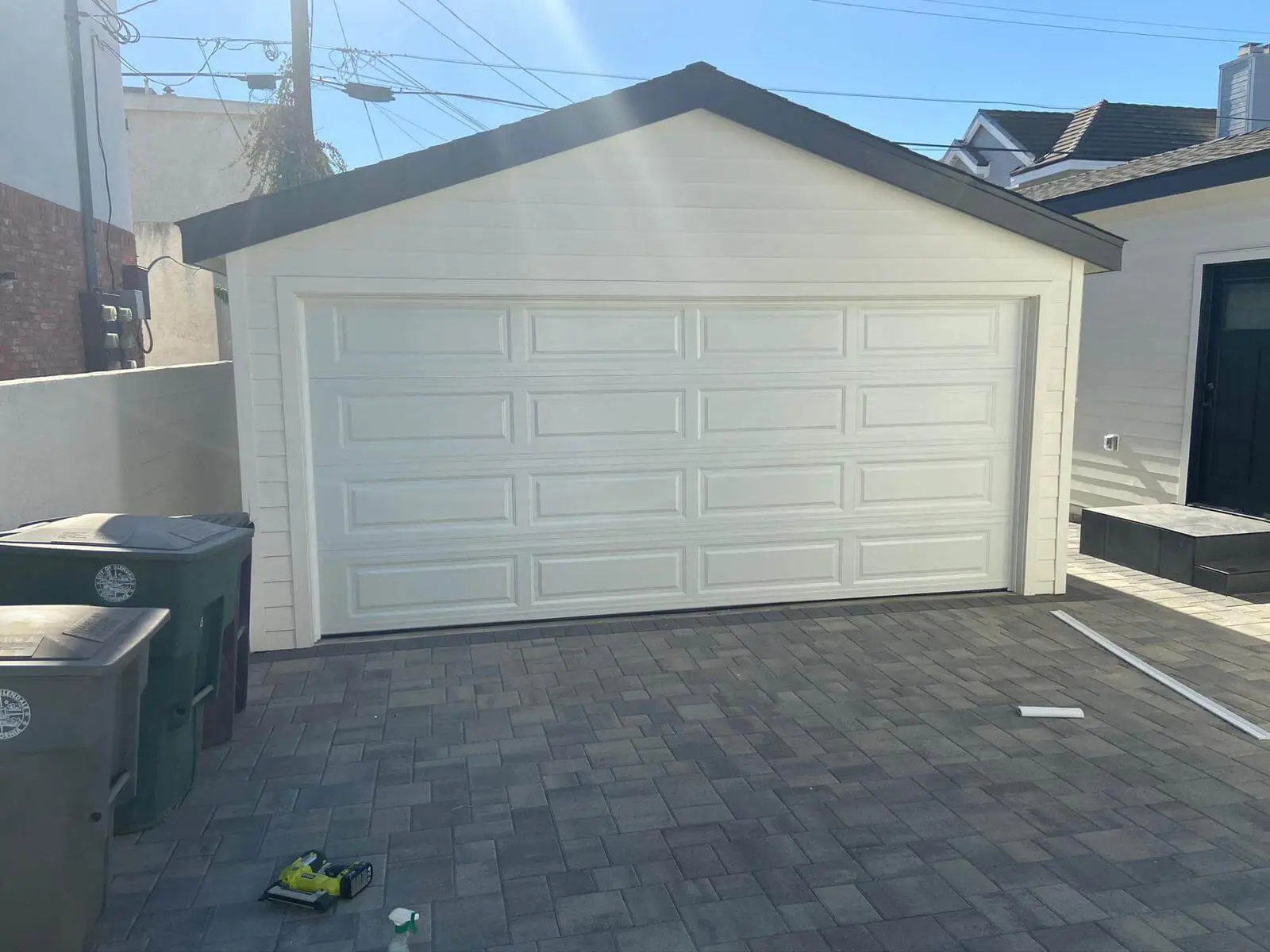
Waking up to the noise of a malfunctioning garage door is never pleasant. A garage door is a crucial part of your home’s security and convenience, but like any mechanical system, it has a limited lifecycle. Over time, wear and tear can lead to operational problems, leaving homeowners frustrated and unsure of the cause. If your garage door isn’t working as it should, knowing how to troubleshoot your garage door can save you time, money, and prevent potential accidents.
Content
How to Troubleshoot Your Garage Door: Key Signs It Needs Attention
Recognizing early signs of a problem is essential to effectively troubleshoot your garage door. Common indicators include:
Loud, unusual noises: Grinding, screeching, or popping sounds when the door moves could indicate broken springs, worn-out rollers, or an issue with the garage door opener.
The door feels heavy or unbalanced: Springs provide counterbalance for the door. If a spring breaks, the door becomes heavy and difficult to operate.
Door stops or reverses unexpectedly: Malfunctioning sensors or misaligned tracks can cause the door to stop mid-operation.
Slow movement: If your garage door moves slower than usual, it might be a problem with the motor or lubrication issues in the rollers and hinges.
Visible damage: Bent tracks, frayed cables, or loose hardware are clear signs your door needs attention.
Noticing any of these signs early can help prevent more serious damage. Let’s explore step-by-step how to troubleshoot your garage door and keep it functioning optimally.
Step 1: Inspect the Tracks and Rollers to Troubleshoot Your Garage Door
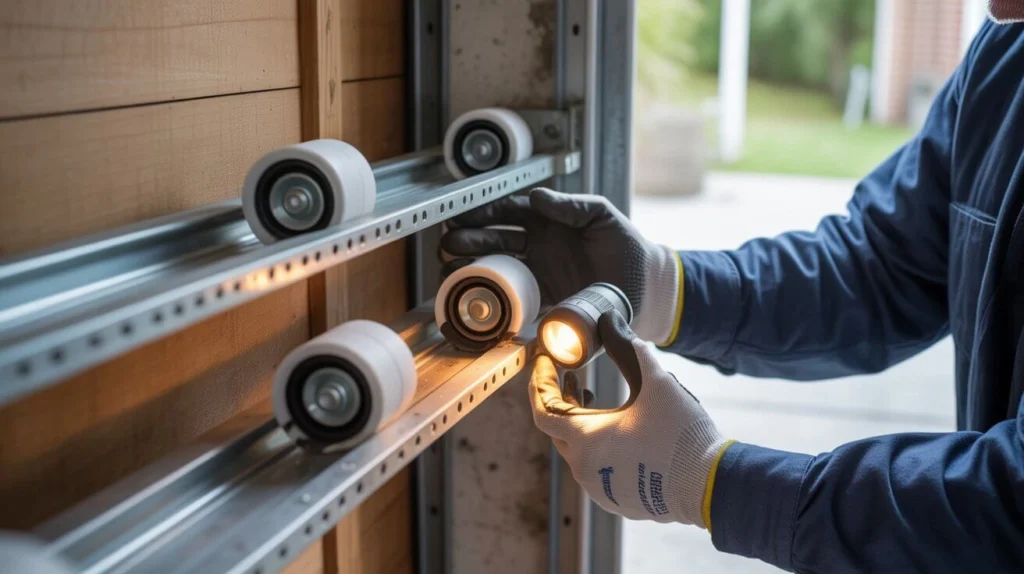
Garage door tracks and rollers are vital components that guide your door as it opens and closes. Over time, dust, dirt, and grease can accumulate, causing the door to jerk or make noise.
Cleaning the tracks: Remove visible debris and wipe down the tracks using warm water and a soft brush. Avoid using oil, as it can attract more dirt.
Checking alignment: Make sure the tracks are parallel and properly aligned. Loose tracks can cause the door to stick or wobble.
Inspecting rollers: Look for worn or cracked rollers. Replacing them can significantly improve door movement and reduce noise.
Regular track and roller maintenance is one of the simplest ways to extend the life of your garage door.
Step 2: Lubricate Moving Parts
Your garage door has several moving components—springs, hinges, pulleys, and rollers—that handle heavy loads every day. Proper lubrication keeps them working smoothly.
Use a high-quality garage door lubricant to oil hinges, rollers, and springs. Avoid WD-40, as it’s better suited for cleaning than long-term lubrication.
Apply lubricant sparingly to avoid excess buildup, which can attract dust and debris.
Regular lubrication not only reduces noise but also prevents premature wear of parts.
Keeping moving parts well-lubricated is essential to troubleshoot your garage door effectively and ensures smoother operation and a longer lifespan.
Step 3: Test the Springs
Garage door springs play a critical role in balancing the door. A broken spring can make your door feel heavy, unresponsive, or even dangerous to operate.
Visual inspection: Look for gaps, rust, or visible damage in torsion or extension springs.
Manual test: With the door closed, try lifting it manually. If it feels unusually heavy or doesn’t stay open, the springs may be broken.
Safety warning: Garage door springs are under high tension, making DIY repairs risky. If you suspect a broken spring, let a professional troubleshoot your garage door safely.
Step 4: Check the Sensors and Remote
Modern garage doors have safety sensors to prevent accidents. Misaligned or dirty sensors can stop your door from closing properly.
Clean the sensors: Wipe the sensor lenses with a soft cloth to remove dust or cobwebs.
Check alignment: Ensure the sensors face each other and the indicator lights are green.
Test the remote: Replace batteries and ensure the remote is functioning correctly.
Addressing sensor issues often resolves problems where the door reverses unexpectedly or fails to close fully.
Step 5: Examine the Garage Door Opener
Sometimes, the issue isn’t the door itself but the opener. Knowing how to troubleshoot your garage door can help identify common opener problems, which include:
Worn-out gears or motor problems causing slow operation.
Loose or broken chains or belts leading to jerky movements.
Electrical issues, such as faulty wiring or circuit boards.
If your garage door moves slowly, hesitates, or makes unusual noises, the opener may need servicing or replacement. In many cases, simple maintenance like tightening bolts or lubricating the opener mechanism can restore smooth operation.
Step 6: Test Balance and Safety Features
Proper balance ensures the door operates efficiently and safely. An unbalanced door puts extra strain on springs, rollers, and the opener.
Disconnect the opener by pulling the release cord. Manually lift the door halfway and let go. If it moves up or down on its own, it’s unbalanced.
Check the auto-reverse function by placing an object in the door’s path. The door should reverse immediately upon contact.
Testing these features regularly ensures your garage door operates safely and reduces the risk of accidents.
Step 7: Schedule Regular Maintenance
Even if your garage door appears to be functioning normally, preventive maintenance is key to longevity. A few tips:
Inspect tracks, rollers, and springs every 6 months.
Lubricate all moving parts twice a year.
Keep sensors clean and aligned.
Tighten loose bolts, screws, and hardware regularly.
Professional garage door inspections once a year help troubleshoot your garage door early, preventing costly repairs and ensuring smooth operation.
The following tips are sure to help you keep your door in a tip-top working condition for years to come:
Tracks are most susceptible to the accumulation of oil, dust and other debris. Finding some time to cleaning them once in a while can help you keep things on the track. You can remove grease using warm water and use any brush to wipe out dirt.
There’re some parts in your garage door system that do the tough job. These moving parts include springs, hinges, rollers and pulleys. If they are working the right way, it means your garage door is also working optimally. You can use any lubricant to keep the rough part lubricated for smoother and quieter garage door operations.If your garage door is acting up, start by checking the sensors, springs, and remote batteries. Regular maintenance prevents costly repairs. For businesses offering repair solutions, you can also advertise with us to reach local homeowners effectively.
When to Call a Professional
While many minor issues can be fixed yourself, some problems need a professional to troubleshoot your garage door safely.
Broken or worn-out springs.
Bent or damaged tracks that prevent smooth operation.
Electrical or motor issues in the garage door opener.
Persistent noise despite lubrication and cleaning.
A licensed technician has the tools and experience to safely repair or replace critical components, ensuring your door works reliably.
Benefits of Troubleshooting Your Garage Door
Taking the time to troubleshoot your garage door offers several advantages:
Enhanced safety: Prevents accidents caused by malfunctioning doors.
Cost savings: Catching small issues early avoids costly repairs.
Extended lifespan: Regular maintenance keeps components in optimal condition.
Smooth operation: Reduces noise and ensures effortless door movement.
Conclusion
A properly functioning garage door is essential for safety, convenience, and home security. By knowing how to troubleshoot your garage door, you can identify potential problems early, perform routine maintenance, and ensure smooth operation for years to come. From cleaning tracks and lubricating parts to checking springs and sensors, simple steps go a long way. And when issues arise that are beyond DIY fixes, professional garage door technicians are just a call away.
Maintaining your garage door isn’t just about convenience—it’s about protecting your home, your family, and your investment. Start troubleshooting today, and enjoy a garage door that works reliably every time.
FAQs
How do I troubleshoot my garage door?
Learn simple steps to troubleshoot your garage door and fix common issues quickly.
How to troubleshoot garage door chain?
Step-by-step guide to troubleshoot garage door chain issues for smoother operation.
What are common garage door opener problems?
Identify and fix the most common garage door opener problems before they worsen.
What are the most common garage door repairs?
Explore the most common garage door repairs to maintain smooth and safe operation.
Meet Jack, our garage guru. With a wrench in one hand and a can-do attitude in the other, he’s your go-to expert for all things repair and replacement.